
The Squeak That Gets Louder Every Morning
You hit the opener button on a cold morning, and the door groans its way up the track with a squeal that seems to echo off the driveway. Maybe it's been getting louder for weeks, or maybe it just showed up overnight after the first hard frost. Either way, that noise is usually your garage door telling you it's dry and needs attention before winter makes things worse.
Why This Matters More Once the Weather Turns
Garage doors in this part of Ohio go through a lot. Humid summers swell wood and gum up hardware with dust and pollen, then cold winters bring ice, road salt tracked in on tires, and temperature swings that make metal contract and old grease stiffen up. A door that was fine in August can start binding, squeaking, or catching in the tracks once the thermometer drops. A proper lubrication now, before the deep cold sets in, is one of the cheapest ways to keep things running smoothly through the icy months ahead.
Tools You'll Need
- A garage-door-specific lithium grease or silicone-based spray lubricant
- A clean, lint-free rag
- A soft-bristle brush or old toothbrush
- A step stool or short ladder
- Work gloves and safety glasses
- A flashlight to check hard-to-see hinges and rollers
Step-by-Step: How to Lubricate Your Garage Door
- Close the door and disconnect the opener. Pull the manual release cord so you can move the door by hand and work safely without the motor engaging.
- Inspect before you lubricate. Run your hand along the tracks, hinges, and rollers (carefully, watching for sharp edges) and look for rust, dried grease buildup, or visible wear. This is also when you'll spot problems that go beyond a simple lube job.
- Clean off old grime first. Wipe down the tracks, hinges, and rollers with a dry rag to remove dust, pollen, and old caked-on lubricant. Use the brush to get into tight spots. Lubricating over dirt just creates a gritty paste that grinds down parts faster.
- Lubricate the hinges. Apply a small amount of lithium grease or silicone spray to each hinge pivot point, working the door up and down a few inches to let it work into the joint.
- Lubricate the rollers. If you have steel rollers, lubricate the bearings, not the wheel surface itself. If your rollers are nylon, skip lubricating the roller and just treat the metal stem and bearing.
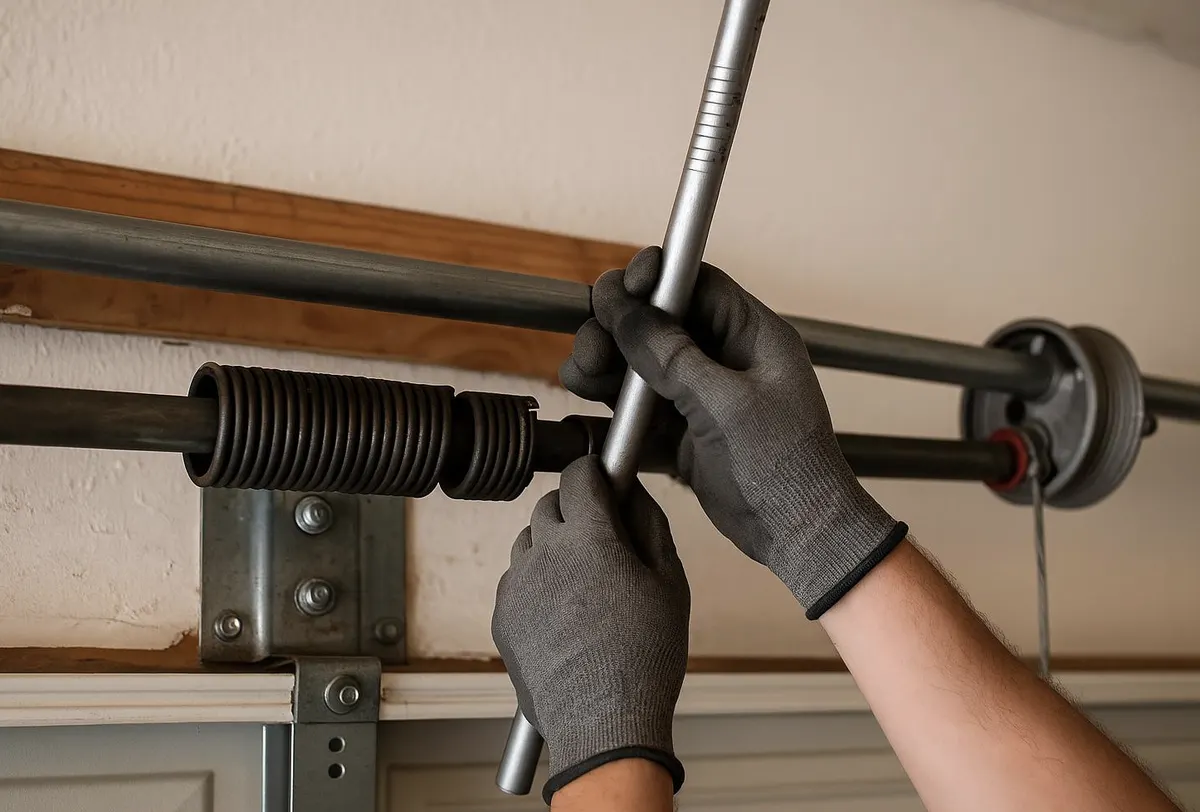
- Lightly coat the springs. A thin layer of lubricant on the torsion or extension springs helps prevent rust and reduces the friction that causes metal fatigue over time. Don't soak them, and never attempt to adjust spring tension yourself.
- Lubricate the opener's chain or screw drive. Follow the lubricant your opener manufacturer recommends (often a specific white lithium grease for screw drives). Wipe off excess so it doesn't drip or collect dust.
- Do not lubricate the tracks themselves. Tracks should be cleaned, not greased. Lubricant on the track surface attracts dirt and can actually make the rollers slip.
- Reconnect the opener and test the door. Run it up and down a few times, listening for remaining noise and watching for smooth, even movement on both sides.
Products to Use and Products to Avoid
Use These
- Garage-door-specific lithium grease — durable, water-resistant, and formulated to handle temperature swings without drying out in winter.
- Silicone-based spray lubricant — good for hinges and rollers, resists dust buildup better than oil-based products.
- Manufacturer-recommended lubricant for your opener — check your opener's manual, especially for screw-drive models.
Avoid These
- WD-40 — it's a solvent and water displacer, not a long-term lubricant. It strips away old grease and evaporates quickly, leaving parts drier than before within a few weeks.
- Standard motor oil or household 3-in-1 oil — too thin, drips, and attracts dust and road salt residue that gets tracked into the garage in winter.
- Heavy grease or petroleum jelly — too thick for small moving parts, gums up in cold temperatures, and can gunk up rollers.
- Anything on the nylon roller wheel itself — it doesn't need lubrication and can actually cause it to slip in the track.
What's Safe for Homeowners vs. What Needs a Technician
Cleaning hardware, lubricating hinges and rollers, and treating your opener's chain or screw drive are all reasonable DIY tasks with basic tools and a bit of care. Where it crosses the line into technician territory: if the door is binding, dragging, or off-track even after lubrication, if a spring looks stretched, rusted through, or has a visible gap in its coils, or if cables look frayed. Torsion springs in particular are under heavy tension and have caused serious injuries when homeowners attempt to adjust or replace them without the right tools and training. If lubrication doesn't solve the noise or the door still feels uneven going up and down, that's a sign something mechanical needs a closer look, not more grease.
When to Call Granville Garage Door
If you've gone through these steps and the door is still squealing, sticking, or moving unevenly, it's worth having it looked at before winter ice and cold make a minor issue harder to fix. Our garage door maintenance service includes a full inspection of springs, cables, rollers, and opener hardware, so we catch wear before it turns into a stuck door on a freezing January morning. If we find a spring that's reaching the end of its life, our spring replacement service handles that safely with the right tools and tension equipment, something that shouldn't be a DIY project.
If your garage door needs a maintenance check or a closer look before the cold weather sets in, give Granville Garage Door a call. We serve Granville, Newark, Heath, Pataskala, Johnstown, Alexandria, Hebron, and Buckeye Lake, and we're happy to get your door running smoothly before winter arrives.