
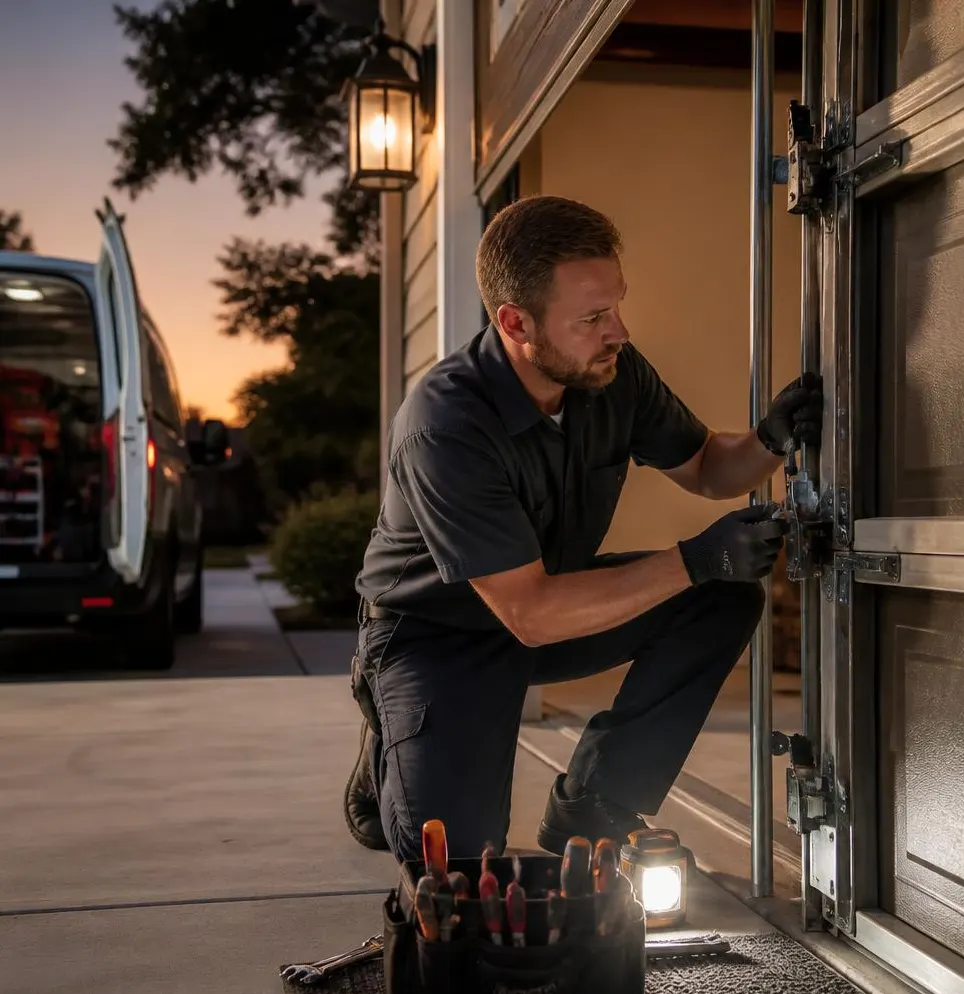
You hit the button on the wall and the light blinks twice before the motor finally engages. The chain grinds for a second, then the door creeps up slower than it used to. Or maybe it reverses halfway down for no obvious reason, and you're standing there in the cold wondering whether to call someone or just live with it until spring. That moment is where most opener decisions actually get made, not at a showroom.
What's Actually Failing
Before deciding anything, it helps to know what's breaking. A few common patterns:
- Dead logic board, healthy motor: remote won't pair, wall button is unresponsive, but the motor runs fine once triggered manually. Often repairable.
- Worn drive system: chain slipping off the sprocket, belt fraying, or a stripped gear on an older chain-drive unit. Usually a straightforward parts repair.
- Misaligned safety sensors: door reverses before touching the floor, especially after a bump or seasonal shift in the frame. Almost always a fast, cheap fix.
- Motor struggling or overheating: labored sound, hot housing, or the unit cutting out mid-cycle, which shows up more in humid summer months when components run warmer. This is a warning sign, not just a nuisance.
- No battery backup, cracked housing, discontinued parts: these point toward a unit near the end of its service life rather than a single bad component.
Repair vs. Replace, Side by Side
Repair
- Lower upfront cost, typically in the low hundreds of dollars depending on the part.
- Keeps your current opener's chain, belt, or screw-drive mechanism and its noise level as-is.
- Good option if the unit is under 8–10 years old and this is its first real issue.
- Risk: if the motor itself is tired, you may be paying to fix symptoms while the underlying unit keeps declining.
Replace
- Higher upfront cost, generally in the mid-hundreds to low thousands depending on drive type and features.
- Comes with modern safety sensors, rolling code security, and often a battery backup, which matters here given how often ice storms take out power for a few hours at a time.
- Quieter belt-drive options are worth considering if the garage sits under or near a bedroom.
- Resets the clock, meaning no repair calls for several years in most cases.
The Five-Year Math
A single repair now might cost a fraction of a full replacement. But openers rarely fail just once. If a unit is already 10-plus years old and needs a second service call within a couple of years, those repair costs start stacking up against a full replacement, and you're still left with an aging motor, no battery backup, and parts that get harder to source every year. On the other hand, replacing a unit that only needed a $40 sensor realignment is money that didn't need to be spent. The five-year decision really comes down to age plus repair frequency, not just what's broken today.
What Makes Sense for Most Homes Here
For a typical Granville-area garage, single door, moderate use, exposed to real winter cold and summer humidity, the practical line is this: if the opener is under eight years old and this is an isolated issue, repair it. If it's past the ten-to-twelve-year mark, already had one prior repair, or lacks battery backup, replacement is usually the better five-year decision, especially heading into a season with ice, salt, and the power blips that come with winter storms.
When to Call Granville Garage Door
If your opener is acting unpredictably and you're not sure whether it's the sensors, the logic board, or the motor itself, that's exactly what a service call is for. We handle both Garage Door Opener Repair & Installation, so we'll diagnose the actual problem first rather than assuming the worst, and walk you through honest repair-versus-replace numbers based on your specific unit's age and condition. We also offer Garage Door Maintenance visits that catch sensor misalignment and drive wear before they turn into a dead opener on a cold morning.
If your opener in Granville, OH is acting up, call Granville Garage Door for a straight answer on repair versus replacement, and get it sorted before winter makes the decision for you.